
The new Vande Bharat Express train is specially designed to operate seamlessly in Jammu & Kashmir's challenging winter conditions for the upcoming Katra-Srinagar rail route.

While Angel One and Unifi Capital have obtained the final licence, Jio BlackRock, Capitalmind, Choice International and Cosmea Financial Holdings have received in-principle approvals.

Shares of state-owned bank stocks were under pressure on Monday due to muted deposit and credit growth numbers reported by these lenders in the October-December quarter (Q3) of 2024-25 (FY25). The Nifty PSU Bank index was down 4 per cent, with Union Bank of India emerging as the biggest loser as its shares fell 7.5 per cent to close at Rs 114.7, followed by a 5.7 per cent drop in shares of Bank of Baroda (BoB) to Rs 228 and a 4.7 per cent slide in shares of Bank of India to Rs 99.8 on the National Stock Exchange.

Dr Singh's eldest daughter Professor Upinder Singh gently reminded the gathering that this was a moment for prayer, not accolades.

The average age is 56, making the Lower House the oldest in India's parliamentary history and a year older than the previous Lok Sabha.

'We may see this momentum going into 2025 and may keep up with the demand, given the strong pipeline.'
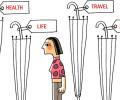
'Health and motor insurance will continue to be our two most important segments'

Maruti Suzuki, Tata Motors, Mahindra & Mahindra, Hyundai and MG Motors are gearing up to introduce EVs in India.
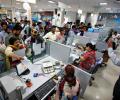
In 2025 banks are in for challenges such as pressure on margins and slowing credit growth. With the likelihood of a repo rate cut in February or April, external benchmark-linked loans of banks will be repriced immediately. However, deposit rates are expected to adjust more gradually, which could impact the net interest margin (NIM) - a key measure of profitability for banks.

In 2025, Indian firms may face higher premiums for fire and engineering insurance covers as reinsurers are likely to revise rates due to rising claims from catastrophic events and higher loss ratios, according to people in the know.
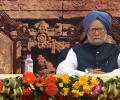
'He will be remembered more for what he did as finance minister -- as someone who functioned well when the political fallout was taken care of.'

The BJP and Congress have called out the 'Delhi model' as a hoax, built on sustained propaganda when the ground reality is different.
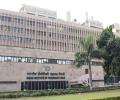
Major recruiters, with double-digit offers at IIT campuses this year so far, include American Express, Barclays, BCG, Cars24, Deutsche Bank, Goldman Sachs, Google, Intel India, Meesho, Micron Technology, Microsoft, OLA, Oracle, Reliance, and Qualcomm.

'Geopolitics will be the most important driver of financial markets in 2025.'

If it becomes a reality, the Chennai-based company will become the first private player from India to conduct such a mission to the lunar surface.

Wedding planner WedMeGood estimates that the average wedding budget has surged to Rs 36.5 lakh this year, with destination weddings averaging Rs 51 lakh.

Another major takeaway from Unstop's report is the growing disparity between academic preparation and corporate expectations.

'To be able to sail through such volatilities, it is prudent to focus on quality.'

'I think today RBI supervision is much sharper than what it was earlier.'

Maharashtra, Karnataka and Delhi are emerging as major hubs for employable talent.
 © 2026 Rediff.com - Advertise with us - Disclaimer - Privacy Policy - Sitemap - Feedback - About us - Terms of use - Grievances